Private PTSD Treatment in London: What It Involves, What It Costs, and What to Expect
- 2 days ago
- 12 min read

Post-traumatic stress disorder is one of those conditions that is simultaneously widely discussed and widely misunderstood. Most people are aware of the term. Far fewer understand what PTSD actually looks like in clinical practice, what modern treatment involves, or what it means to seek private support in London when NHS pathways are stretched or unsuitable.
This guide addresses those questions directly. Whether you have been living with the effects of trauma for years without formal support, have recently experienced a traumatic event and want to understand your options, or have received a PTSD diagnosis through the NHS but are not receiving the specialist care you need, the following sets out what private PTSD treatment looks like, what the evidence supports, and how to identify a clinic in London with the depth of expertise to help.
Why People Seek Private PTSD Treatment in London
The decision to access private care for PTSD is rarely impulsive. It typically follows a period of either not receiving timely support, or receiving support that does not match the complexity of the presentation.
NHS Talking Therapies (formerly IAPT) provides access to some trauma-focused work, but the provision of specialist EMDR and trauma-focused CBT by experienced practitioners is inconsistent across regions. More complex presentations, including complex PTSD (C-PTSD), are often referred to secondary care services where waits can be substantial. Private care removes the waiting period entirely.
Private care also offers a level of clinical specialism that is difficult to guarantee within generalist NHS provision. Seeing the same consultant psychiatrist or clinical psychologist throughout assessment and treatment, in a setting where trauma is a genuine area of expertise rather than a peripheral one, is a meaningful clinical advantage for a condition where therapeutic relationship and pacing are central to recovery.
People also come to private care for reasons related to confidentiality. For some, particularly those in professional roles, the military, or careers where a mental health record may feel significant, the privacy of a self-funded clinical relationship matters. Others have specific concerns about being assessed or treated by someone without experience of their particular type of trauma.
Understanding PTSD and Complex PTSD
PTSD and complex PTSD are related but distinct presentations, and the distinction matters clinically because it shapes the approach to treatment.
PTSD
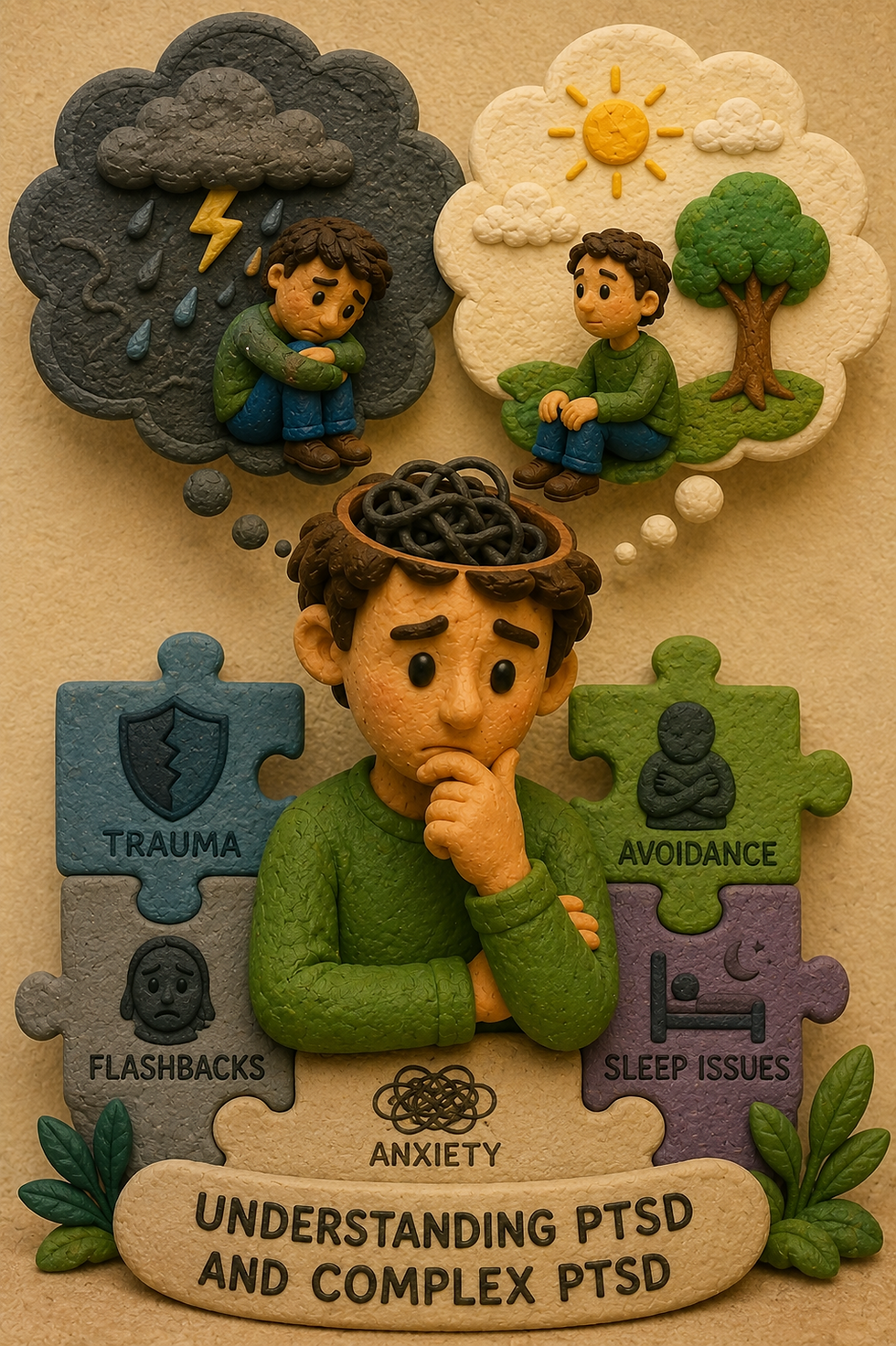
Post-traumatic stress disorder develops following exposure to a traumatic event or series of events that overwhelm a person's ability to cope. The condition is characterised by four main symptom clusters: intrusive symptoms such as flashbacks and nightmares; avoidance of reminders associated with the trauma; negative alterations in cognition and mood; and alterations in arousal and reactivity, including hypervigilance, exaggerated startle responses, and difficulty sleeping.
PTSD can follow a single event such as an assault, accident, natural disaster, or medical emergency, as well as repeated or prolonged exposure to traumatic situations. Symptoms may emerge immediately after the event or be delayed by months or even years. It is also possible to develop PTSD following indirect exposure, such as witnessing trauma or learning about traumatic events that have happened to others.
Complex PTSD (C-PTSD)
Complex PTSD is a distinct diagnosis recognised in the ICD-11, the diagnostic framework used in the United Kingdom. It arises specifically from prolonged or repeated trauma, particularly trauma from which escape was difficult or impossible. This includes childhood abuse or neglect, domestic violence, prolonged captivity or coercive control, and sustained interpersonal trauma in early life.
In addition to the core PTSD symptom clusters, C-PTSD is characterised by three further domains of disturbance: difficulties with emotional regulation; negative self-concept, including persistent feelings of shame, guilt, or failure; and difficulties in relationships. These additional features reflect the deeper impact that sustained trauma has on the developing sense of self and the capacity to relate to others.
C-PTSD typically requires a more careful and staged approach to treatment than single-incident PTSD. Attempting to move into trauma processing before sufficient stabilisation is in place can be counterproductive and, in some cases, destabilising. This is one of the reasons why specialist assessment matters: an experienced clinician will identify which phase of treatment is appropriate and will not rush the process.
What Private PTSD Treatment Involves
Assessment
A thorough assessment is the essential starting point. A specialist PTSD assessment at a private clinic will explore the history and nature of the traumatic experiences; the full range of symptoms across all four PTSD clusters; the impact on functioning at work, in relationships, and in daily life; and the presence of co-occurring conditions such as anxiety, depression, dissociation, substance use, ADHD, or autistic traits.
The assessment should also identify which diagnostic formulation best fits the presentation. There is a meaningful clinical difference between PTSD following a single traumatic incident, C-PTSD following sustained early trauma, adjustment disorder following a more recent stressor, and grief responses that may share surface features with trauma. Treatment planning depends on getting this right.
At a well-structured clinic, assessment will involve both psychiatric and psychological input where clinically indicated. This ensures that the full picture is captured, that co-occurring conditions are not missed, and that the question of medication is addressed by a clinician qualified to assess it.

Stabilisation
For presentations involving significant emotional dysregulation, dissociation, or severe functional impairment, treatment begins with a stabilisation phase before any direct trauma processing work. This phase focuses on developing grounding and distress tolerance skills, reducing the intensity of intrusive symptoms, and building the therapeutic relationship. It is not a delay in treatment. It is treatment. Attempting to process traumatic material before the nervous system has sufficient capacity to tolerate that work is clinically inadvisable, and is an approach that distinguishes experienced trauma clinicians from generalists.
The length of the stabilisation phase will vary considerably between individuals. For some, a small number of sessions is sufficient. For those with complex presentations, substantial stabilisation work may be required before processing begins.
Trauma-Focused CBT
Trauma-focused cognitive behavioural therapy is one of the two treatments recommended by NICE as first-line psychological therapies for PTSD. It is a structured, time-limited intervention that addresses the unhelpful cognitions and avoidance behaviours that maintain PTSD following a traumatic event.
TF-CBT typically involves psychoeducation about trauma and PTSD; revisiting and processing the traumatic memory in a controlled, paced way; identifying and challenging the negative beliefs that have formed about the self, the world, or other people as a result of the trauma; and gradually reducing the avoidance behaviours that are sustaining the disorder. When delivered by a clinician with specific training in trauma-focused work, TF-CBT is one of the most robustly evidenced treatments in mental health.
EMDR

Eye Movement Desensitisation and Reprocessing is the second NICE-recommended first-line treatment for PTSD and is increasingly recognised as equally effective to TF-CBT across a wide range of presentations. EMDR is also recommended for complex PTSD and is often the preferred approach for presentations involving earlier and more pervasive trauma.
EMDR works through a structured eight-phase protocol that helps the brain process traumatic memories that have become stored in a fragmented, emotionally raw form. During EMDR processing, the client attends to a traumatic memory whilst simultaneously engaging in bilateral stimulation, typically following the therapist's moving finger with their eyes, though tapping and auditory tones are also used. This dual-attention process appears to support the adaptive reprocessing of distressing material, reducing the emotional intensity of traumatic memories and integrating them more fully into normal autobiographical memory.
EMDR does not require the client to talk through the traumatic experience in extensive detail. For many people, particularly those who find narrative approaches to trauma difficult, this is a significant advantage. It is also a treatment with a relatively well-defined structure, which means progress can be monitored meaningfully.
Other Evidence-Based Modalities
For presentations involving complex trauma, earlier life experiences, or difficulties that extend beyond the core PTSD symptoms, additional or alternative therapeutic approaches may be integrated. These include psychodynamic therapy for those where understanding the relational and developmental dimensions of trauma is central; Acceptance and Commitment Therapy (ACT) for building psychological flexibility; schema therapy for those with deeply ingrained self-beliefs rooted in early adverse experiences; and somatic approaches for presentations where trauma has had significant physiological impact.
The most experienced trauma clinicians draw on a range of modalities, adapting their approach to the individual rather than applying a single protocol regardless of fit.
Medication
Medication is not typically the first-line intervention for PTSD and is not a substitute for evidence-based trauma-focused therapy. However, it can play an important supporting role in managing symptoms that are severe enough to interfere with engagement in therapy, or where co-occurring conditions such as depression or anxiety require pharmacological input.
NICE guidance recommends that medication for PTSD is considered alongside trauma-focused psychological therapy rather than instead of it. SSRIs are the most commonly used pharmacological treatment for PTSD and can reduce the intensity of intrusive symptoms, hyperarousal, and associated depression and anxiety. Other medications may be considered for specific symptoms such as nightmares or sleep disturbance.
The involvement of a consultant psychiatrist in the care of someone with PTSD is therefore valuable not only for complex diagnostic questions but for the appropriate management of medication where it is indicated, and for access to the full range of treatment options.
The Difference Between a Therapist, Psychologist, and Psychiatrist for PTSD
Understanding who you need to see, and why, avoids both unnecessary expense and the risk of receiving care that does not match the complexity of your presentation.
A therapist or counsellor may have some training in trauma, but the level and depth of that training varies considerably. The term is not regulated in the United Kingdom, meaning that anyone can use it regardless of qualification level. For PTSD treatment, the minimum standard to look for is BABCP accreditation for CBT therapists or BACP/UKCP registration for therapists practising other modalities, alongside specific postgraduate training in trauma-focused approaches. Practitioners providing EMDR should hold accreditation from EMDR Association UK.
A clinical psychologist holds a doctoral-level qualification in psychology and is registered with the Health and Care Professions Council (HCPC). Clinical psychologists can assess and treat PTSD using evidence-based psychological therapies including TF-CBT and EMDR. They cannot prescribe medication.
A consultant psychiatrist is a medical doctor with specialist training in psychiatry. Psychiatrists can diagnose PTSD, assess for co-occurring conditions, prescribe and manage medication, and provide psychological treatment. For presentations that are diagnostically complex, involve co-occurring mental health conditions, have not responded to previous treatment, or require medication alongside therapy, psychiatric involvement is important.
At Psyche Clinic, psychiatric and psychological care work alongside each other. This means that where both are needed, they are coordinated within the same clinic by clinicians who communicate directly about your care.

What to Look for in a Private PTSD Provider in London
The quality of private trauma care in London varies considerably. When evaluating providers, the following questions are worth applying carefully.
NICE-compliant treatment. The clinic should be able to state clearly that EMDR and trauma-focused CBT are available and are the primary treatment approaches for PTSD, in line with NICE guideline NG116. Clinics relying solely on counselling, mindfulness-based approaches, or non-evidence-based therapies should be approached with caution.
Genuine trauma specialism. There is a meaningful difference between a clinic that offers trauma therapy as one service among many, and one with clinicians who have trained specifically in trauma-focused interventions in specialist settings. Ask directly about the clinical experience of the clinicians who will be assessing and treating you. Training at a specialist trauma service within the NHS, such as a tertiary trauma unit or a nationally recognised centre, is a meaningful indicator of depth.
EMDR accreditation. If EMDR is part of the proposed treatment, confirm that the delivering clinician holds accreditation from EMDR Association UK. This ensures they have completed the required training and supervision hours to practise the approach safely and effectively.
A staged approach for complex presentations. Reputable trauma clinics do not rush into processing. Ask whether the clinic offers a stabilisation phase before trauma processing, particularly if you know or suspect your trauma history is complex or early in origin.
Psychiatric involvement where needed. For presentations with co-occurring conditions or where medication is a consideration, access to a consultant psychiatrist within the same clinical setting is important.
Insurance recognition. If you hold private medical insurance, confirm that the clinic is recognised by your insurer before your first appointment.
What Does Private PTSD Treatment Cost in London?
The cost of private PTSD treatment in London depends on the nature of the assessment and the type, frequency, and duration of therapy involved.
A psychiatric assessment at a specialist clinic in central London typically ranges from £600 to £775 for an initial consultation of approximately one hour. This provides a comprehensive diagnostic assessment, formulation, and treatment recommendation. Follow-up psychiatric appointments are generally priced between £300 and £375 for a 30-minute review or £500 to £650 for a full hour.
Psychological therapy sessions, delivered on a weekly basis, are typically priced between £175 and £250 per session at a specialist London clinic. EMDR and TF-CBT for single-incident PTSD often involves structured courses of between 8 and 16 sessions. C-PTSD presentations typically require longer treatment, with the duration determined by the complexity and history of the presentation.
It is worth factoring in the initial stabilisation phase for complex presentations, which may add sessions prior to any formal processing work beginning. Your clinician will provide a realistic estimate of likely duration following your initial assessment.
Private medical insurance will often cover PTSD assessment and treatment at recognised clinics. If you hold a policy with Bupa, Aviva, AXA, Cigna, Vitality, Allianz, or Simplyhealth, contact your insurer before your appointment to understand your level of cover. Psyche Clinic is recognised by all of these insurers. For a full breakdown of fees, visit our appointments and pricing page.
Private PTSD Treatment at Psyche Clinic, Harley Street
Psyche Clinic is a specialist private mental health clinic at 10 Harley Street, London, offering trauma and PTSD treatment delivered by senior clinicians with genuine specialism in this area.

Dr Susie Rudge is a clinical psychologist with specialist experience in trauma, PTSD, and complex presentations, with particular expertise in EMDR and trauma-focused CBT for adults across a range of trauma histories and backgrounds.

Lauren Callaghan, also a clinical psychologist and published
author, brings training experience from the Centre of Anxiety Disorders and Trauma (CADAT) and the Anxiety Disorders Unit at the Maudsley Hospital, two of the UK's most respected specialist centres for anxiety and trauma-related conditions.

Dr Isaac Akande offers a compassionate, culturally informed approach to trauma, anxiety, and identity, drawing on a decade of specialist clinical practice.
Our assessments are thorough and take seriously the full complexity of trauma presentations, including the intersection of trauma with anxiety, depression, substance use, ADHD, and autistic traits. Treatment is staged appropriately, with stabilisation prioritised before processing for those who need it, and evidence-based modalities selected on the basis of your presentation rather than protocol convenience.
Where psychiatric input is needed alongside psychological therapy, our consultant psychiatrists are available to assess, prescribe, and provide ongoing medical management within the same clinic. Care is coordinated, not siloed.
Appointments are available in person at 10 Harley Street and via secure Zoom. We typically have availability within days, and all consultations are conducted in complete confidence. Psyche Clinic is recognised by all major private medical insurers.

Frequently Asked Questions
Do I need a GP referral to access private PTSD treatment?
No. You can contact Psyche Clinic directly without a referral from your GP. Many patients come to us having not previously engaged with their GP about their trauma symptoms, and we are able to conduct a full assessment and begin treatment from your first appointment.
What is the difference between PTSD and complex PTSD?
PTSD typically follows a single traumatic event or a discrete series of events, and is characterised by intrusive symptoms, avoidance, negative changes in mood and cognition, and hyperarousal. Complex PTSD (C-PTSD) arises from prolonged or repeated trauma from which escape was difficult, such as childhood abuse, domestic violence, or coercive control. C-PTSD includes the core PTSD symptoms alongside additional difficulties with emotional regulation, self-perception, and interpersonal relationships. The distinction matters for treatment planning, as C-PTSD generally requires a more carefully staged approach.
What is EMDR and how does it work?
EMDR (Eye Movement Desensitisation and Reprocessing) is a structured, evidence-based psychological therapy recommended by NICE as a first-line treatment for PTSD. It works through a process of attending to a traumatic memory whilst engaging in bilateral stimulation, usually following the therapist's moving finger. This appears to support the brain's natural processing of traumatic material, reducing the emotional intensity attached to traumatic memories and helping them integrate into normal autobiographical memory. EMDR does not require the person to describe the traumatic event in extensive detail, which many find preferable to narrative-based approaches.
Is PTSD treatable?
Yes. PTSD is a highly treatable condition. Research consistently shows that trauma-focused CBT and EMDR each produce significant symptom reduction in the majority of people who engage with them. Many people achieve substantial or full remission from PTSD symptoms with evidence-based treatment. Complex PTSD presentations typically require longer treatment, but significant improvement is achievable. The key factor is access to clinicians with genuine specialism in trauma-focused approaches.
What if I have tried therapy for PTSD before and it did not help?
Previous treatment that has not been effective does not mean recovery is impossible. There are several reasons why earlier treatment may not have worked: the therapy may not have been trauma-focused (general counselling does not have an evidence base for PTSD); the clinician may not have had specific training in EMDR or TF-CBT; a stabilisation phase may not have been offered before processing began; or co-occurring conditions such as depression, ADHD, or dissociation may not have been adequately assessed or addressed. A thorough assessment at a specialist clinic can identify what was missing and propose a more targeted approach.
Can I use private medical insurance for PTSD treatment at Psyche Clinic?
Yes. Psyche Clinic is recognised by all major private medical insurers, including Bupa, Aviva, AXA, Cigna, Vitality, Allianz, and Simplyhealth. We recommend contacting your insurer before your first appointment to confirm your level of cover and any pre-authorisation requirements.
How long does private PTSD treatment take?
This depends on the nature of the trauma and the complexity of the presentation. For single-incident PTSD, a structured course of TF-CBT or EMDR may involve between 8 and 16 sessions. For C-PTSD or more complex histories, treatment is typically longer and is paced carefully to the individual. Your clinician will discuss a realistic timeframe with you following the initial assessment and will review progress regularly throughout treatment.
Book an Assessment
If you are considering private PTSD or trauma treatment in London and would like to speak with a specialist, Psyche Clinic is here to help. Our team is available to discuss your situation confidentially and advise on the most appropriate pathway for your needs.
To book an appointment or make an enquiry, visit psycheclinic.co.uk or contact us at contact@psycheclinic.co.uk or +44 (0) 20 7467 8300.
Appointments are available in person at 10 Harley Street, London W1G 9PF, and via Zoom.